By Ryan Constant
•
December 1, 2025
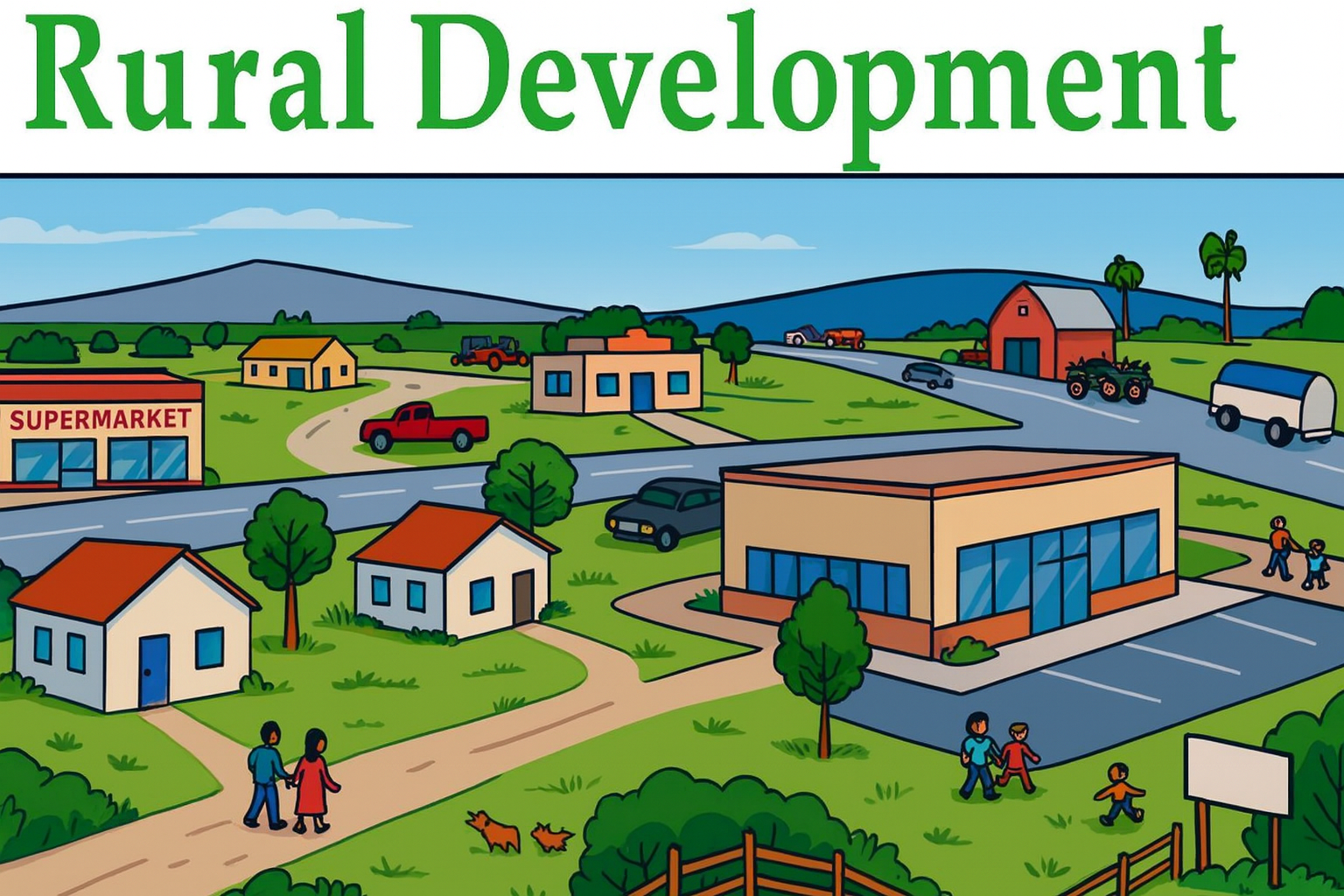
Smaller rural locations are drawing attention for their available low cost land, access to nearby metro areas and simplicity that is incentive rich for new development that large, crowded metros can't offer. 1. Push from cities, pull from small towns Rural communities with commutable access to a metro area are especially well-positioned right now. As housing and operating costs in cities climb, both residents and businesses are looking farther out for value. That trend is pushing population and capital into “rural-adjacent” markets small towns within a reasonable drive time of a regional job center. For commercial land, that can mean: Demand for neighborhood retail (grocers, QSR, healthcare, auto services) to serve new residents Flex and light industrial buildings for contractors, logistics, and small manufacturers Hospitality and tourism assets in towns with natural or recreational amenities National and regional retailers are already expanding beyond metros into smaller but fast-growing rural counties where demand is unmet, and strip centers and drive-thru/QSR pads are seeing high occupancy and rent growth. 2. Commercial real estate as a growth engine Commercial real estate isn’t just a passive “landlord play” in rural markets—it’s often the catalyst for job creation, tax base growth, and infrastructure. Research on CRE generally shows each new development project ripples through construction, finance, local services, and ongoing employment. In small towns, the impact is amplified: A single grocery anchored center can keep millions of dollars a year from leaking to the next county. A modest industrial building can house dozens of jobs that anchor families in the community. Reuse of a historic downtown building can kick-start broader Main Street reinvestment. USDA and other agencies recognize this leverage, which is why many of their rural programs target business facilities, infrastructure, and community commercial assets. Key Drivers of Rural Commercial Opportunity 1. Broadband and the digital economy If you’re thinking about rural growth and ignoring broadband, you’re missing the foundation. New research from the Center on Rural Innovation and NTCA shows rural counties with high broadband usage see 213% higher business growth and more self-employment than similar counties with low broadband adoption. USDA estimates that fully leveraging digital agriculture and rural broadband could create tens of billions in additional annual economic benefit, with a large share tied directly to rural e-connectivity. For commercial land development, that translates to: Stronger office and flex demand from remote workers, co-working spaces, and small professional firms. Better tenants: e-commerce-enabled local retailers, telehealth providers, distance-learning hubs. Site selection advantage if you can market “shovel-ready” parcels with fiber or robust fixed-wireless options. If your rural site doesn’t have broadband, check state broadband offices, local cooperatives, or USDA’s broadband-related programs as potential funding or partnership routes. 2. Main Street and downtown revitalization Rural downtowns are undergoing a quiet reinvention. Case studies from USDA and planning organizations show that coordinated Main Street strategies—historic preservation, façade grants, streetscape improvements, and upper-story housing—can dramatically boost downtown business activity. For commercial property owners, that means: Value upside for underused historic buildings if you pair physical rehab with good tenant curation (coffee shops, coworking, boutique retail, food halls). Expanded demand for small retail bays (1,000–3,000 SF) rather than just big-box formats. Opportunities to structure public-private deals with façade grants, tax credits, or low-interest loans. One Brookings study emphasizes that the most successful rural downtowns aren’t just economically stronger; they also intentionally build social inclusion and community identity, which makes projects more resilient across cycles. 3. Industry clusters, logistics, and value-added agriculture Rural communities are also leaning into sector-specific strategies: Value-added ag: meat processing, food manufacturing, wood products, and biofuels often seek lower land costs and proximity to raw inputs. USDA’s Meat and Poultry Processing Expansion Program and other targeted programs show the federal focus here. Logistics & light manufacturing: highway-frontage and rail-served parcels remain attractive for tenants who want to serve a multi-state region while avoiding big-city costs. Healthcare and education: USDA’s Community Facilities and distance-learning programs are funding new rural hospitals, clinics, and education hubs that create demand for nearby retail and services. All of these users need buildings: industrial shells, clinic spaces, training centers, offices, and employee-serving retail. How Developers & Investors Can Approach Rural Commercial Land 1. Start with data, not anecdotes Rural deals often get framed by stories (“the plant might expand,” “everyone says we need a hotel”), but credible partners want numbers: Demographics & income – age mix, household income, population trends. Commuting patterns – how many workers are driving into the area or out of it. Retail leakage – dollars being spent outside the county in key categories (groceries, dining, building materials). Traffic counts – especially on highway sites or major arterials. Resources like state economic development agencies, the U.S. Census Bureau, and commercial data platforms can provide this. For strategy ideas, guides on rural economic development from groups like Golden Shovel Agency summarize what’s working in similar communities. 2. Align with federal and state rural programs One of the biggest differences between rural and urban commercial development is the depth of federal and state support if you know where to look. USDA Rural Development alone runs more than 50 programs that touch business, infrastructure, energy, community facilities, and cooperatives. Key business-oriented options include: Business & Industry Loan Guarantees – enhance bank financing for rural business facilities. Rural Business Development Grants (RBDG) – for small business growth, often involving commercial space or equipment. Rural Economic Development Loan & Grant (REDLG) – zero-interest loans through local utilities for job-creating projects (which can include commercial/industrial buildings). Cooperative development and investment programs – useful for shared commercial kitchens, maker spaces, or multi-tenant facilities. By layering local incentives (property tax abatements, TIF districts, revolving loan funds) on top of these, rural communities can often make smaller projects pencil out that wouldn’t otherwise attract private capital on pure rent comps. 3. Think “right-sized” product Urban developers sometimes overbuild when they come into small markets. Rural success usually comes from product that’s appropriately scaled: Retail: Instead of a 150,000 SF lifestyle center, maybe it’s 10–30k SF of neighborhood retail with a grocery, a drive-thru QSR, and a small inline strip. Industrial: A 40–80k SF clear-span building with good truck access can be far more leasable than a speculative 300k SF box in many rural regions. Mixed-use/downtown: Two- to four-story infill with ground-floor commercial and upper-story residential or offices often matches local demand and financing capacity. Case study series from NADO and other organizations show that many vibrant rural communities deliberately focused on a few high-impact, right-sized projects rather than chasing mega projects. 4. Reuse before you greenfield Rural America is full of underused assets: old schools, vacant big-box stores, shuttered plants, and tired strip centers. Repositioning these can be faster and cheaper than new construction, and it’s easier to finance when you can point to existing infrastructure and visibility. Examples of reuse strategies include: Turning a vacant grocery into a community health hub or training center, then surrounding it with supporting retail. Converting a downtown department store into mixed-use with apartments and ground-floor food & beverage. Repurposing a warehouse into an incubator for trades, makers, and micro-manufacturing. Community revitalization case studies highlight how strategic reuse not only boosts tax base but also restores local pride and identity. Practical Tips for Rural Commercial Land Stakeholders For local governments & community leaders Create a clear land-use vision. Identify priority corridors, gateways, and downtown blocks for commercial growth. Put that vision into your comprehensive plan and zoning so developers see predictability. Pre-entitle and pre-infrastructure key sites. Shovel-ready parcels with zoning, utilities, access, and (ideally) broadband are far more attractive to serious investors. Build a funding stack. Combine USDA programs, state grants, local revolving loan funds, and private capital. Many successful rural projects use a mix rather than relying on a single source. Invest in place-making. Streetscapes, signage, public art, and small public spaces in commercial areas make it easier to attract tenants and private investment. The Bigger Picture: Rural Growth as a Long-Game Rural commercial development isn’t about chasing a single “home run” project. It’s a long-term strategy built around: Upgrading infrastructure and broadband Revitalizing downtowns and corridors Leveraging federal and state tools Right-sizing product and tenant mix to match local realities When done well, the payoff goes far beyond rent rolls. Rural CRE projects can stabilize tax bases, reduce economic leakage, create durable jobs, and give younger residents a reason to stay—or come back. If you’re a landowner, broker, or community leader in a rural area, this is a moment to be proactive: Audit your commercial sites. Map them against broadband, traffic, and workforce assets. Learn which USDA and state programs fit your vision. Start assembling partnerships—local lenders, utilities, co-ops, institutions, and experienced developers. Rural growth may not make the same headlines as big-city skyscrapers, but in terms of impact per dollar, the combination of commercial land, smart planning, and targeted programs might be one of the most powerful economic development plays in the country.